Passive and Active Control
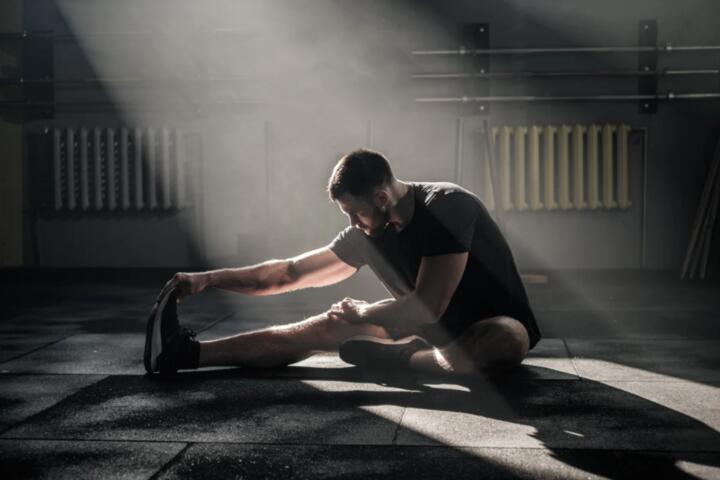
To the untrained eye, a yogi touching their toes and an Olympic weightlifter hitting a deep snatch appear to be doing the same thing: demonstrating range of motion. However, they are utilizing two distinct physiological properties. Flexibility is the ability of a muscle to be lengthened passively—think of a rubber band being pulled by outside forces. Mobility, conversely, is the ability of a joint to move actively through a range of motion using internal muscular tension and neurological coordination.
Consider a patient I recently observed who could perform a full "pigeon pose" on the floor (high flexibility) but could not lift their knee toward their chest while standing without their lower back rounding (poor mobility). This gap between what your tissues allow and what your nervous system controls is where 90% of non-contact injuries occur. Without strength at the end-ranges of your flexibility, your joints are essentially "unsupervised," leading to micro-trauma and instability.
Research published in the Journal of Sports Rehabilitation indicates that individuals with high passive flexibility but low active control are 2.5 times more likely to experience ligamentous strains. Furthermore, the American Council on Exercise (ACE) reports that joint-related issues account for over 25% of all primary care visits in adults over 50, a statistic that can be drastically reduced by prioritizing movement quality over simple stretching.
Modern Movement Deficits
The primary issue in modern fitness is the "stretching obsession." Many individuals attempt to fix joint "tightness" by stretching muscles that are actually neurologically "locked" to provide stability. If your brain perceives a joint as unstable, it will command the surrounding muscles to tighten as a protective mechanism. Standard static stretching in this scenario is like trying to loosen a knot by pulling on both ends—it often results in more tension or, worse, a labral tear or disc herniation.
Another significant pain point is the "Desktop Hunch." Prolonged sitting leads to adaptive shortening of the hip flexors and a complete loss of thoracic spine mobility. When these individuals go to the gym and perform overhead presses or squats, their bodies compensate by overextending the lumbar spine. This "leakage" of force doesn't just reduce performance; it creates a shelf-life for your spine. Statistics suggest that chronic lower back pain costs the US economy nearly $100 billion annually in lost productivity and medical expenses.
Real-world consequences manifest as "mysterious" knee pain that is actually caused by immobile ankles, or neck tension rooted in a frozen ribcage. Without a balanced approach, you aren't just losing range; you are losing the ability of your mechanoreceptors to communicate with your brain. This degradation of proprioception is a leading cause of falls and fractures in later life, making this a matter of safety as much as it is of performance.
The Neurological Component: Why Your Brain Limits Range
Your nervous system operates on a "safety first" principle. If you haven't trained your muscles to produce force in a deep squat, your brain will physically block you from reaching that depth by tightening the hamstrings. This is known as the Stretch Reflex. To overcome this, you must prove to your cerebellum that you can control the space you occupy. Mobility training is essentially a conversation with your nervous system to expand its "safe zone."
The Role of Joint Capsule Health in Longevity
While flexibility focuses on the muscles (the "meat"), mobility focuses on the joint capsule (the "container"). The joint capsule is the first tissue to move and the first to stiffen with age. Utilizing Controlled Articular Rotations (CARs), a staple of the Functional Range Conditioning (FRC) system, helps maintain the health of the synovial fluid. Without this, joints undergo "arthrokinematic" thinning, leading to the bone-on-bone friction common in osteoarthritis.
Muscle Spindle vs. Golgi Tendon Organ (GTO) Function
Flexibility training targets the GTOs, which allow a muscle to relax under tension. Mobility training, specifically PNF (Proprioceptive Neuromuscular Facilitation), involves contracting the muscle while at its end-length. This recalibrates the muscle spindles. By shifting from passive hanging to active "isometrics," you increase the "Maximum Voluntary Contraction" (MVC) at long muscle lengths, which is the ultimate insurance policy against muscle belly tears.
Impact on Mitochondrial Density and Tissue Quality
True mobility work involves high-tension holds that stimulate fibroblasts to lay down collagen in an organized fashion. Passive stretching, if done excessively without strengthening, can lead to "creep," where ligaments become permanently overstretched and lose their recoil. Research shows that eccentric loading (the "lowering" phase of mobility drills) increases mitochondrial biogenesis in the connective tissue, keeping the fascia "young" and hydrated.
The Kinetic Chain: From the Big Toe to the Neck
Mobility is a systemic issue. A lack of "big toe extension" (needed for walking) can cause the foot to over-pronate, which rotates the tibia, stresses the medial collateral ligament (MCL) of the knee, and eventually shifts the pelvis into an anterior tilt. By treating the body as a series of interconnected levers rather than isolated muscles, you address the root cause of "wear and tear" rather than just chasing symptoms with ibuprofen or ice.
Integrated Physical Autonomy
To bridge the gap, you must move away from 30-second passive stretches and toward active loading. The gold standard in modern sports science is PAILs and RAILs (Progressive and Regressive Angular Isometric Loadings). For example, in a 90/90 hip stretch, you would spend 2 minutes breathing into the stretch (flexibility), then 30 seconds pushing your leg into the floor (building strength in the new range), followed by 30 seconds trying to lift your leg off the floor (short-range contraction).
Use tools like Voodoo Floss bands for joint distraction or weighted clubs (Steel Clubs) to challenge the end-range of the shoulders. These tools provide "proprioceptive feedback" that a static floor stretch cannot. Digital platforms like Kinstretch or The Ready State offer specific protocols that quantify your progress. Aim for a "Mobility Minute" for every hour of sitting—small, frequent doses of movement are more effective for the nervous system than one long session per week.
The results of this shift are measurable. In a study of tactical athletes (police and fire), those who implemented 15 minutes of joint-specific mobility work 3 times a week saw a 34% reduction in lower-limb injuries over 12 months. On a personal level, improving ankle dorsiflexion by just 5 degrees can reduce the shear force on the patellar tendon by nearly 20% during jumping activities, effectively "de-aging" the knees.
If you're looking for a practice that trains both sides of that equation at once, yoga for athletes is a practical way to improve performance and balance rather than working mobility and flexibility separately.
Real-World Success Stories
Case Study 1: The Tech Firm Recovery
A mid-sized software company in Austin noticed a spike in ergonomic-related health insurance claims. They implemented a "Joint Hygiene" program using the GMB Elements framework, focusing on 10 minutes of daily wrist, spine, and hip mobility during "stand-up" meetings. Within 6 months, reported instances of Carpal Tunnel symptoms dropped by 45%, and employee-reported "daily energy levels" rose by an average of 22%.
Case Study 2: The Masters Athlete Comeback
A 54-year-old competitive CrossFit athlete, "John," was considering surgery for a "pinched" shoulder. Instead of standard physical therapy, he worked with an FRC Specialist to isolate his scapular-thoracic rhythm. By increasing his active shoulder internal rotation from 30 to 60 degrees through loaded eccentrics, his pain vanished. Within 4 months, he set a personal record in the overhead squat, a feat he hadn't achieved in a decade, proving that "age-related" decline is often just "disuse-related" stiffness.
Integrated Movement Frame
| Feature | Flexibility (Passive) | Mobility (Active) | The "Longevity" Goal |
|---|---|---|---|
| Primary Driver | External force/Gravity | Internal muscular tension | Active control of all passive range |
| Tissue Targeted | Muscle belly / Fascia | Joint capsule / Nervous system | Dense, resilient connective tissue |
| Benefit | Temporary relaxation | Permanent movement options | Injury prevention & Power output |
| Recommended Tool | Yoga blocks / Straps | Kettlebells / Resistance bands | Daily "Joint Hygiene" (CARs) |
| Frequency | Post-workout (Cool down) |
Pre-workout / Daily morning | Consistent daily inputs |
Common Movement Pitfalls
The most frequent error is "stretching through pain." Sharp, pinching pain (impingement) is a signal that bone is hitting bone. Stretching into this will only cause inflammation. If you feel a "pinch" in the front of your hip during a stretch, stop; you need to create "joint space" through distraction techniques before you can gain range. Another error is neglecting the feet. Your feet have 33 joints; if they are locked in rigid shoes all day, your brain will "down-regulate" your balance, making all other mobility work less effective.
Avoid "passive-only" routines before explosive activities. Research shows that holding a static stretch for longer than 60 seconds can temporarily decrease muscle power output by up to 10%. Instead, use dynamic mobility—like leg swings or "World's Greatest Stretch"—to prime the nervous system. Finally, don't ignore the breath. If you are holding your breath, your sympathetic nervous system (fight or flight) is active, which causes muscles to guard. You must utilize nasal, diaphragmatic breathing to signal to the brain that the new range is safe.
FAQ
How long does it take to see real mobility changes?
Neurological changes (feeling "smoother") happen in seconds, but structural changes to the collagen fibers take 6 to 24 months of consistent loading. Think of it as orthodontic work for your joints.
Can I be "too mobile"?
Yes, this is called hypermobility. If you have excessive range without strength, you are at high risk for dislocations. You should focus almost exclusively on "Stability" and "End-range Isometrics" rather than stretching.
Is yoga enough for mobility?
Yoga is excellent for flexibility and mindfulness, but it often lacks the "pulling" and "high-tension loading" required for true joint mobility. Complement yoga with resistance training or FRC.
What is the best time of day to train mobility?
Morning is best for "Joint Hygiene" (CARs) to lubricate joints. High-intensity mobility (expanding range) is best done in the afternoon when body temperature is highest.
Does foam rolling count as mobility?
Foam rolling is "Self-Myofascial Release." It’s a tool to down-regulate the nervous system and temporarily reduce pain, but it does not create long-term changes in range of motion unless followed by active movement.
Author's Insight
In my years working with both professional athletes and desk-bound executives, I’ve realized that mobility is the ultimate "force multiplier." You can have the strongest engine in the world, but if your alignment is off and your brakes are dragging, you’ll never reach top speed without breaking down. My personal rule is "never outsource your movement." Don't rely on a therapist to "fix" you; use daily CARs to own your joints. The goal isn't just to live longer, but to ensure that your 80-year-old self has the freedom to hike, play with grandkids, and move without the "tax" of chronic pain.
Summary
Achieving true physical longevity requires a shift in perspective: stop chasing the ability to touch your toes and start chasing the ability to control your body at every degree of movement. Flexibility provides the potential for movement, but mobility provides the license to use it. To start, audit your joints daily, implement active loading like PAILs/RAILs, and prioritize joint capsule health over muscle length. Your future self won't care how many pounds you benched, but they will care deeply that your hips and shoulders still function with the fluidity of youth. Move well, move often, and move with intent.