Manual vs Mechanical MFR
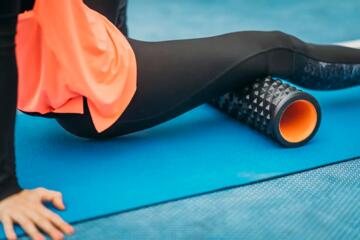
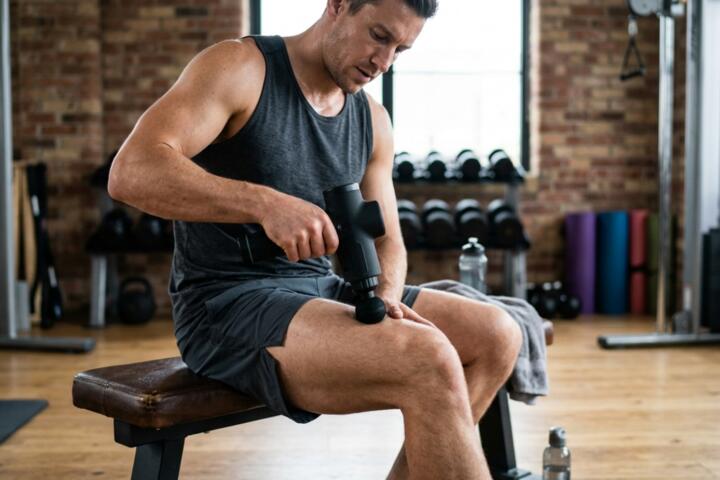
At its core, percussive therapy is a form of mechanical manipulation that combines elements of traditional massage with high-frequency vibration. Unlike a foam roller, which relies on static pressure and body weight, a motorized device uses a reciprocating head to strike the muscle tissue thousands of times per minute. This creates a physiological response known as "vibration-induced anesthesia," where the rapid pulses override pain signals sent to the brain, allowing for deeper tissue work without the usual discomfort.
In practice, consider a marathon runner dealing with "stiff" calves. While static stretching might take 20 minutes to yield a 5% increase in flexibility, a 30-second bout with a high-end device like a Theragun Pro can instantly alter the muscle's tonicity. This isn't magic; it's physics. Research published in the Journal of Clinical and Diagnostic Research suggests that vibration therapy can be as effective as manual massage in preventing DOMS (Delayed Onset Muscle Soreness), with some studies showing a reduction in lactate dehydrogenase levels by up to 15% within 48 hours of intense exercise.
The market is currently valued at over $500 million globally, driven by the realization that recovery is no longer a passive activity. However, the efficacy of these tools depends entirely on the "amplitude" (how deep it hits) and "stall force" (how much pressure you can apply before the motor stops). A cheap knock-off might vibrate the skin, but a professional-grade tool moves the muscle, which is the critical distinction for actual recovery.
Modern Recovery Failures
The most common mistake users make is treating the device like a jackhammer rather than a precision tool. Applying excessive downward pressure on a "cold" muscle or a bony prominence can lead to bruising, or worse, aggravated inflammation. When you jam a device into a knotted muscle without moving it, you risk causing a defensive contraction rather than the intended relaxation, effectively neutralizing the tool's benefits.
Timing is another significant pain point. Many athletes use percussive therapy exclusively after a workout, missing the "prime" window. Using the tool post-injury without a diagnosis is also a recipe for disaster; applying 40 lbs of stall force to a Grade II muscle tear can turn a two-week recovery into a two-month ordeal. The lack of anatomical knowledge often leads users to target the pain site (the symptom) rather than the kinetic chain issue (the cause).
Finally, there is the "more is better" fallacy. Using a massage gun for 15 minutes on a single muscle group doesn't lead to "super-recovery." Instead, it can cause skin irritation and nerve desensitization. Professional protocols, such as those taught by Hyperice through their "Hyperice University" program, emphasize that 60 to 90 seconds per muscle group is usually the physiological ceiling for benefit.
Implementation Strategy
Optimizing Pre-Workout Neural Activation
To use percussive therapy for warm-ups, the goal is neural excitation, not deep relaxation. Use a high-speed setting and move the device rapidly over the target muscle groups for only 30 seconds. This increases local blood flow and "wakes up" the mechanoreceptors. Athletes using the Theragun Elite often report a subjectively "lighter" feeling in their limbs, allowing for a greater power output during the initial sets of a workout.
Managing Post-Exercise Metabolic Waste
Post-workout recovery requires a different cadence. Slow down the movement to 1 inch per second and use a lower frequency. This encourages lymphatic drainage and helps clear metabolic byproducts like lactic acid. Focus on the muscle belly rather than the tendons. By integrating a device like the Hypervolt 2 Pro, which offers five speeds, you can customize the intensity to match the level of muscle trauma experienced during the session.
Targeting Myofascial Trigger Points
For chronic "knots," use a pinpoint attachment (often called the bullet head). Apply the tool to the area for 30 seconds while simultaneously moving the joint through its range of motion—a technique known as "active release." This dual-action approach breaks up fascial adhesions more effectively than static pressure. Clinical data indicates that this combined method can improve joint range of motion by 10-15% more than percussive therapy alone.
Improving Sleep Quality via Parasympathetic Activation
Percussive therapy isn't just for muscles; it’s for the nervous system. Using a dampener attachment on a low setting along the traps and lower back before bed can trigger the parasympathetic nervous system. This helps lower heart rate variability (HRV) and prepares the body for deep sleep. Devices with quiet motor technology, such as the Ekrin B37, are preferable here to avoid auditory overstimulation before rest.
Travel and Sedentary Tissue Maintenance
For those in office jobs or frequent flyers, "tech neck" and hip flexor tightness are constant issues. Compact tools like the Theragun Mini or Hypervolt Go 2 allow for "micro-recoveries" during the day. Two minutes on the hip flexors after a four-hour flight can prevent the pelvis from tilting anteriorly, which often leads to lower back pain. It’s about maintenance, not just rehabilitation.
Institutional Case Studies
Case Study 1: Professional Basketball Conditioning
A high-performance training center in Los Angeles integrated percussive therapy into the half-time routine of several professional basketball players. Previously, players complained of "stiffening" during the 15-minute break. By implementing a mandatory 2-minute percussive flush on the quads and glutes using Hyperice tools, the staff recorded a 7% increase in vertical jump height during the third quarter compared to players who only performed static stretching. The result was attributed to maintained muscle temperature and neurological readiness.
Case Study 2: Chronic Plantar Fasciitis in Amateur Runners
A group of 20 amateur runners suffering from chronic heel pain participated in a 4-week trial. Half the group used traditional calf stretches, while the other half used a percussive device on the calf and the bottom of the foot for 2 minutes daily. The percussive group reported a 40% greater reduction in morning foot pain and a 22% improvement in ankle dorsiflexion. The high-frequency pulses effectively desensitized the overactive nerve endings in the plantar fascia more rapidly than manual stretching.
Recovery Tools Analysis
| Feature | Professional Grade (e.g., Theragun Pro) |
Mid-Range Consumer (e.g., Hypervolt 2) |
Budget / Entry Level |
|---|---|---|---|
| Amplitude (Depth) | 16mm (Deepest) | 10mm - 12mm | 6mm - 8mm (Vibration only) |
| Stall Force | 60 lbs | 30 - 40 lbs | 15 - 20 lbs |
| Noise Level | Moderate (QuietForce tech) |
Very Quiet (Brushless motors) |
High / Variable |
| Primary Use | Deep tissue, Pro athletes | General fitness, Recovery | Light massage, Relaxation |
Pitfalls and Corrections
One major error is using the device on the neck, specifically the carotid artery area. The high-frequency vibrations can potentially dislodge plaque or cause vascular issues. Always stay on the fleshy part of the upper traps. Another mistake is ignoring the "float" technique. You should never push the gun into the muscle; let the weight of the device do the work. If the gun starts bouncing off the skin, you are either on a bone or applying too much pressure.
Users also tend to forget to clean the attachments. Silicone and foam heads can harbor bacteria, especially when used directly on sweaty skin post-workout. Use an alcohol-based wipe after every session to prevent skin irritation. Lastly, don't use these devices on areas with "pins and needles" sensations, as this usually indicates a pinched nerve, and mechanical percussion will only increase neural inflammation.
FAQ
Can a massage gun replace a professional massage therapist?
No. While it is excellent for daily maintenance and targeted recovery, it cannot replicate the nuanced touch, lymphatic drainage techniques, or the "global" postural assessment provided by a human therapist. It is a supplement, not a replacement.
How long should I use it on one spot?
For general muscle tension, 60 seconds is plenty. For a specific knot, you can go up to 2 minutes, but you must move the head around the area rather than staying perfectly still to avoid bruising.
Is it safe to use every day?
Yes, provided you aren't overworking the same muscle group to the point of soreness. Most professionals recommend once or twice daily—once during your warm-up/cool-down and once in the evening for relaxation.
Why do some massage guns cost $50 and others $500?
The price difference lies in the motor quality (stall force), the depth of the stroke (amplitude), battery longevity, and noise dampening. Cheap devices are usually just "vibrators" that don't reach the deep muscle tissue.
Can I use it on my lower back?
Yes, but avoid the spine itself. Focus on the erector spinae (the muscles running parallel to the spine) and the quadratus lumborum (the fleshy area between your ribs and hips).
Author’s Insight
In my years of working with athletic recovery protocols, I've found that the best tool is the one you actually use. I personally keep a mini-device in my gym bag because the convenience of a 30-second "flush" between heavy sets of squats is a game-changer for my hip mobility. I’ve noticed that while the top-tier models offer incredible power, the average gym-goer often gets 90% of the benefits from a mid-range device. My top tip: don't just hit the spot that hurts; hit the muscles above and below it to truly release the tension line.
Summary
Percussive therapy is far more than just a fitness trend; it is a scientifically backed method for enhancing muscle recovery and neurological readiness. While it cannot replace the expertise of a physical therapist, it provides a level of autonomy over one's physical health that was previously unavailable to the public. To get the most out of your device, focus on consistency rather than intensity, respect the anatomy of your "bony" landmarks, and use the specific attachments as they were intended. Start by integrating a 2-minute routine into your post-workout cool-down this week and monitor your morning stiffness levels—the data usually speaks for itself.